
Il Castello Caracciolo
Sentinella della Valle del Corace
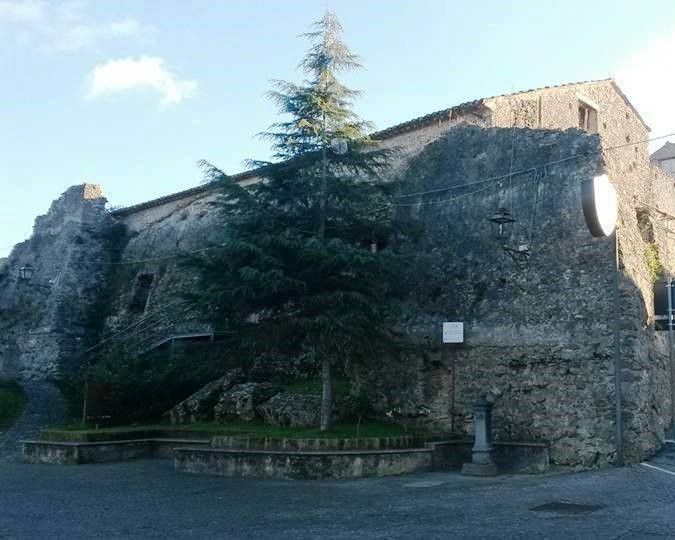
Il Castello Caracciolo sorge in una posizione strategica che domina la Valle del Corace e offre uno sguardo privilegiato verso il Golfo di Squillace.
Non è un rudere abbandonato, ma un luogo dove la storia della nobiltà napoletana (i Caracciolo) si intreccia con la storia del lavoro e dell'artigianato d'eccellenza (la Seta), il tutto incastonato in un paesaggio che guarda al Mar Ionio.
La struttura originaria risale presumibilmente al X-XI secolo. In questa fase medievale, l'edificio non era una residenza di lusso, ma aveva una funzione prettamente difensiva. San Floro, per la sua posizione elevata, serviva come punto di avvistamento e protezione per l'entroterra catanzarese contro le incursioni che potevano arrivare dal mare.
È intorno al 1400 che l'edificio inizia a cambiare volto. Con la stabilizzazione politica del Regno di Napoli, la struttura perde parte della sua severità militare e inizia la sua lenta trasformazione in residenza stabile per le famiglie nobiliari che amministravano il feudo.
La storia del castello è legata a doppio filo ai passaggi di proprietà feudale (i "passaggi di mano" tra nobili).
> I Marincola: Prima dell'arrivo dei Caracciolo, il feudo e il palazzo furono legati alla potente famiglia catanzarese dei Marincola.
> I Caracciolo di Gioiosa: La svolta che dà il nome attuale al castello avviene nel XVIII secolo (1700). Il feudo passò alla famiglia Caracciolo, specificamente al ramo dei Principi di Gioiosa. I Caracciolo erano una delle casate più illustri e ramificate del Regno di Napoli (con origini che risalgono all'epoca bizantina e longobarda).
Sotto la signoria dei Caracciolo, che mantennero il possesso fino all'eversione della feudalità (1806) sancita dalle leggi napoleoniche, il castello consolidò il suo aspetto di palazzo baronale, centro amministrativo ed economico del territorio.
Nonostante le modifiche residenziali, il Castello Caracciolo non ha mai nascosto la sua anima guerriera.
> Struttura: Presenta una pianta rettangolare massiccia.
> Torri: È caratterizzato da quattro torri a base quadrangolare poste agli angoli, tipiche dell'architettura difensiva che doveva permettere il tiro incrociato contro gli assalitori.
> Interni: Si accede tramite un imponente portale in pietra che conduce a un androne con volta a botte e, successivamente, a una corte centrale. Questo cortile era il cuore pulsante della vita del castello, attorno al quale si sviluppavano i magazzini (per le derrate alimentari e la seta) al piano terra e gli appartamenti nobiliari al piano superiore.
La vera particolarità storica di questo castello non risiede solo nelle battaglie o nei blasoni, ma nel suo legame con l'economia.
Tra il 1300 e il 1700, Catanzaro era considerata la Capitale Europea della Seta. San Floro, con le sue immense distese di gelsi (il cibo per i bachi), era il "motore agricolo" di questa industria. Il Castello Caracciolo fungeva da centro di controllo per questa produzione.
Oggi, questa vocazione è stata recuperata in modo straordinario:
> Il Museo Didattico della Seta:
Le sale del castello ospitano oggi un museo unico nel suo genere. Qui sono conservati costumi d'epoca, damaschi catanzaresi preziosi, paramenti sacri e antichi telai.
> Il Legame con il Presente:
Il castello è il punto di partenza culturale per l'attività della cooperativa Nido di Seta, un gruppo di giovani calabresi che ha ripreso l'antica filiera, tornando ad allevare bachi e a tessere la seta come si faceva secoli fa.

Caracciolo Castle
Sentinel of the Corace Valley
Caracciolo Castle stands in a strategic position overlooking the Corace Valley, offering a breathtaking view of the Gulf of Squillace.
It is not an abandoned ruin... but a place where the history of the Neapolitan nobility intertwines with the history of work and craftsmanship of the highest order: silk. All of this is set within a landscape overlooking the Ionian Sea.
The original structure presumably dates back to the 10th and 11th centuries. During this medieval period, the building was not a luxury residence but served a purely defensive function.
Due to its elevated position, San Floro served as a lookout and protective point for the Catanzaro hinterland... against incursions that might come from the sea.
It was around the 15th century that the building began to change its character. With the political stabilization of the Kingdom of Naples, the structure lost some of its military austerity and began its slow transformation into a permanent residence for the noble families who administered the fief.
The castle’s history is inextricably linked to the transfers of feudal ownership (the “changes of hands” among nobles).
> The Marincola Family: Before the arrival of the Caracciolos, the fiefdom and the palace were linked to the powerful Catanzaro family of the Marincolas.
> The Caracciolos of Gioiosa: The turning point that gave the castle its current name occurred in the 18th century (1700). The fiefdom passed to the Caracciolo family, specifically to the branch of the Princes of Gioiosa. The Caracciolos were one of the most illustrious and extensive noble families in the Kingdom of Naples (with origins dating back to the Byzantine and Lombard eras).
Under the rule of the Caracciolos, who retained ownership until the abolition of feudalism (1806) enshrined in Napoleonic laws, the castle solidified its role as a baronial palace and the administrative and economic center of the region.
Despite residential modifications, Caracciolo Castle has never concealed its martial spirit.
> Structure: It features a massive rectangular floor plan.
> Towers: It is characterized by four square-based towers situated at the corners, typical of defensive architecture designed to allow crossfire against attackers.
> Interiors: Access is through an imposing stone portal leading to a barrel-vaulted entrance hall and, subsequently, to a central courtyard. This courtyard was the beating heart of castle life, around which the storerooms (for foodstuffs and silk) on the ground floor and the noble apartments on the upper floor were arranged.
The true historical significance of this castle lies not only in its battles or coats of arms, but in its connection to the economy.
Between 1300 and 1700, Catanzaro was considered the European Capital of Silk. San Floro, with its vast expanses of mulberry trees (the food for silkworms), was the “agricultural engine” of this industry. The Caracciolo Castle served as the control center for this production.
Today, this heritage has been revived in an extraordinary way:
> The Educational Silk Museum:
The castle’s halls now house a one-of-a-kind museum. Here, visitors can see period costumes, precious Catanzaro damasks, sacred vestments, and antique looms.
> The Connection to the Present:
The castle serves as the cultural hub for the activities of the Nido di Seta cooperative, a group of young Calabrians who have revived the ancient production chain, returning to raising silkworms and weaving silk as was done centuries ago.